
Portable solar panels for 2026 are all about practical power on the go.
The best picks charge fast, fold up easily, and hold up well outdoors. They also connect smoothly with power stations, phones, and other gear.
This guide covers top options for camping, travel, and compact carry.
| 200W Portable Foldable Solar Panel Charger for Power Stations |  | Best for Power Stations | Power Output: 200W | Foldable Design: Foldable | Water Resistance: IP65 | VIEW LATEST PRICE | Read Our Analysis |
| Renogy 200W Portable Foldable Solar Panel for Camping |  | Best Premium Pick | Power Output: 200W | Foldable Design: Foldable | Water Resistance: IP65 | VIEW LATEST PRICE | Read Our Analysis |
| ZOUPW 100W Portable Foldable Solar Panel Charger |  | Best Compact Panel | Power Output: 100W | Foldable Design: Foldable | Water Resistance: IP67 | VIEW LATEST PRICE | Read Our Analysis |
| EF ECOFLOW 220W Portable Bifacial Solar Panel |  | Best Bifacial Panel | Power Output: 220W | Foldable Design: Foldable | Water Resistance: IP68 | VIEW LATEST PRICE | Read Our Analysis |
| ELECOM NESTOUT Portable Solar Panel 28W Foldable |  | Best Ultralight Pick | Power Output: 28W | Foldable Design: Foldable | Water Resistance: Water-resistant | VIEW LATEST PRICE | Read Our Analysis |
| EBL 100W Portable Solar Panel for Power Stations | 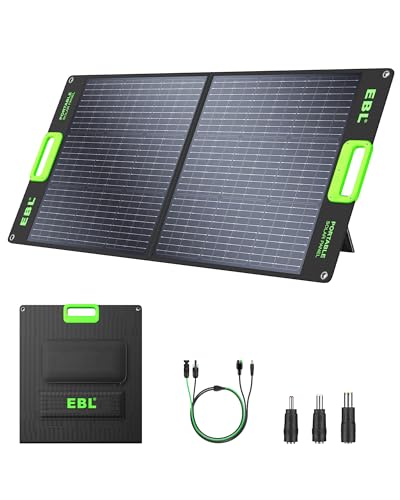 | Best Midrange Option | Power Output: 100W | Foldable Design: Foldable | Water Resistance: IP65 | VIEW LATEST PRICE | Read Our Analysis |
| Anker Solix PS30 30W Foldable Solar Charger | Best Travel Panel | Power Output: 30W | Foldable Design: Foldable | Water Resistance: IP65 | VIEW LATEST PRICE | Read Our Analysis |
More Details on Our Top Picks
200W Portable Foldable Solar Panel Charger for Power Stations
Should you want a high-output panel that’s easy to take off-grid, the 200W Portable Foldable Solar Panel Charger is a strong pick for anyone. You get 23.5% conversion efficiency from monocrystalline cells and 6-layer ETFE lamination, so it squeezes more power from sunlight than many rivals. It works with most power stations, plus RVs and campers, and the included 4-in-1 cable charges 12V AGM, gel, and lithium-ion batteries. Four kickstands help you angle it well, while the IP65 build, rubber handle, and foldable 17.94-pound design make travel simple.
- Power Output:200W
- Foldable Design:Foldable
- Water Resistance:IP65
- Weight:17.94 lbs
- Efficiency:23.5%
- Kickstands:4 adjustable
- Additional Feature:4-in-1 battery cable
- Additional Feature:95% power station compatibility
- Additional Feature:ETFE laminated surface
Renogy 200W Portable Foldable Solar Panel for Camping
Should you require a lightweight, high-output panel for camping or off-grid trips, the Renogy 200W Portable Foldable Solar Panel is a standout pick. You get 25% efficiency from 16BB N-Type cells, so it generates power fast in limited space and cloudy weather. At just 13.89 pounds, it’s easy to carry, and the magnetic closure makes setup simple. You can charge phones, laptops, cameras, and power stations through USB-C and USB-A ports, or connect 12V battery systems. IP65 protection, adjustable kickstands, and UL certification add durability and confidence.
- Power Output:200W
- Foldable Design:Foldable
- Water Resistance:IP65
- Weight:13.89 lbs
- Efficiency:25%
- Kickstands:Adjustable quadfold
- Additional Feature:USB-C PD 45W
- Additional Feature:Magnetic closure storage
- Additional Feature:UL 61730 certified
ZOUPW 100W Portable Foldable Solar Panel Charger
The ZOUPW 100W Portable Foldable Solar Panel Charger is a smart pick should you desire a lightweight, travel-friendly panel that still delivers strong output, with 23.5% efficient monocrystalline cells and a 100W rating for camping, RV trips, fishing, or emergency backup. You’ll appreciate its 9.48-pound foldable design, magnetic carry handle, and quick setup with kickstands that tilt to 45° for up to 25% more sunlight. Its IP67 waterproof build and ETFE coating add durability. Plus, you get 5-in-1 connectors, USB charging ports, a 10-foot cable, and a 12-month warranty with lifetime support.
- Power Output:100W
- Foldable Design:Foldable
- Water Resistance:IP67
- Weight:9.48 lbs
- Efficiency:23.5%
- Kickstands:Adjustable
- Additional Feature:5-in-1 connector cable
- Additional Feature:3 fast-charging ports
- Additional Feature:Lifetime technical support
EF ECOFLOW 220W Portable Bifacial Solar Panel
Should you want a portable panel that squeezes more power out of limited sunlight, the EF ECOFLOW 220W Portable Bifacial Solar Panel is a strong pick for campers, RV owners, and anyone building a reliable backup setup. You get up to 25% conversion efficiency with N-Type cells and a dual-sided design that can harvest up to 28% more energy. Its 30-60° kickstand helps you aim at the sun, while IP68 protection handles dust and rain. At 15.4 pounds, it folds easily, and it works best with EcoFlow power stations for fast, efficient charging.
- Power Output:220W
- Foldable Design:Foldable
- Water Resistance:IP68
- Weight:15.4 lb
- Efficiency:Up to 25%
- Kickstands:30-60° adjustable
- Additional Feature:Bifacial dual-sided design
- Additional Feature:MC4 to XT60i cable
- Additional Feature:Protective carrying bag
ELECOM NESTOUT Portable Solar Panel 28W Foldable
With its 28W output, dual USB-A ports, and built-in LED current checker, the ELECOM NESTOUT Portable Solar Panel is a smart pick should you want a compact charger for phones, tablets, and earbuds on the go. You also get SunPower MAXEON cells, which help enhance efficiency, plus two adjustable stands for better sun exposure. Its water-resistant ripstop nylon build, three hanging loops, and mesh pouches make it easy to carry and organize. At 771 grams, it folds small enough for travel, and its vintage bottle-inspired design adds a distinctive touch.
- Power Output:28W
- Foldable Design:Foldable
- Water Resistance:Water-resistant
- Weight:771 g
- Efficiency:Up to 24% more
- Kickstands:2 built-in
- Additional Feature:IF Design Gold
- Additional Feature:Built-in LED display
- Additional Feature:Three hanging loops
EBL 100W Portable Solar Panel for Power Stations
Should you need a compact solar panel that plays nicely with a wide range of power stations, the EBL 100W Portable Solar Panel is a strong pick. You can pair it with 240, 300, 500, 1000, 1500, and 2000 power stations, plus many generators. Its monocrystalline cells reach 23% efficiency, so you’ll get solid output in strong sun. Smart IC tech helps prevent overcharging, overheating, and short circuits. Two kickstands tilt it 45 degrees for better capture, and the magnetic handle makes packing simple. Its IP65 build and ETFE layers enhance durability.
- Power Output:100W
- Foldable Design:Foldable
- Water Resistance:IP65
- Weight:Not stated
- Efficiency:23%
- Kickstands:2 kickstands
- Additional Feature:Smart IC protection
- Additional Feature:Magnetic handle design
- Additional Feature:MC4 connector set
Anker Solix PS30 30W Foldable Solar Charger
The Anker Solix PS30 30W Foldable Solar Charger is a smart pick should you want a lightweight, travel-friendly panel for camping, hiking, or other outdoor trips. You get 30W of solar charging, plus USB-A and USB-C ports, so you can power two devices at once. It handles smartphones, tablets, cameras, and more. At just 2.2 pounds and 10.7 x 8.8 x 1.7 inches, it’s easy to pack. The IP65 rating helps it resist dust and water, and you also get two carabiners, a user manual, and an 18-month warranty for added peace of mind.
- Power Output:30W
- Foldable Design:Foldable
- Water Resistance:IP65
- Weight:2.2 lbs
- Efficiency:Not stated
- Kickstands:Not stated
- Additional Feature:USB-A and USB-C
- Additional Feature:Two-device simultaneous charging
- Additional Feature:18-month warranty
Factors to Consider When Choosing Portable Solar Panels
Upon selecting a portable solar panel, begin with aligning its power output to what you truly require to charge. You should also evaluate conversion efficiency, weight, and build quality so the panel suits your travel style and endures the weather. Ultimately, ensure it is compatible with your devices and charging setup.
Power Output Needs
Power needs vary widely, so start with matching a portable solar panel to the devices you plan to charge: a smartphone may only need 10–20W, while a power station can demand 100W or more. Check the panel’s maximum output next. A 200W or 220W model can charge several devices at once or keep larger gear running. Then estimate your daily energy use by multiplying device wattage with the hours you’ll use it, so you know the watt-hours you require. Should you travel, camp, or work outdoors, choose a panel with enough output to recharge quickly between uses. Higher-output panels cut waiting time and help you stay powered during critical moments, without overbuying or underpowering your setup.
Conversion Efficiency
Conversion efficiency informs you how much sunlight a panel transforms into usable electricity, so a higher percentage signifies better performance. Whenever you compare portable solar panels, look for modern models that reach 23% to 25% or more, because they’ll provide you more power from the same amount of sunlight. That matters whenever you need faster charging and strong output from a limited panel area. Panel technology also plays a big role: monocrystalline and N-Type cells usually perform better than older designs. Features like multi-layer coatings and improved cell structures can enhance performance too, especially whenever light isn’t perfect. Should you desire the most energy from a compact setup, choose a panel with high conversion efficiency initially, then compare the rest of the specs.
Portability And Weight
Portability matters just as much as output, especially in situations where you’ll carry your panel to campsites, trailheads, or remote work sites. You’ll want to check the weight prior to purchase, because lighter panels make travel easier. Some models weigh just 2.2 pounds, which helps during hiking or backpacking, while others land around 13.89 pounds and still stay manageable for car camping or short carries. Foldable designs also save space, shrinking to about 23.72 x 22.99 x 1.97 inches for easier packing. Look for rubber handles or magnetic closures, too, since they can make setup faster and transport simpler. In cases where a panel folds and unfolds smoothly, you’ll spend less time wrestling gear and more time charging your devices.
Durability And Weatherproofing
Durability matters because a portable solar panel should handle more than just bright, calm days. You’ll want an IP65 rating or higher so splashes, dust, and rough weather don’t cut trips short. Choose panels built with ETFE or tempered glass, since these materials resist UV damage, impacts, and long-term wear better than basic coverings. Check the construction closely; laminated designs often hold up longer and stay reliable through repeated folding, packing, and outdoor use. Adjustable kickstands also help you secure the panel at the right angle, which can improve stability as wind or uneven ground gets involved. Finally, look for UL or CE certification, because those marks show the panel has passed demanding safety and durability tests prior to it reaching you.
Device Compatibility
Even the toughest panel won’t help much unless it can’t connect to your gear, so device compatibility should be high on your checklist. You need the right ports and connectors, whether that’s USB-A, USB-C, or a DC plug for a power station. Make sure the panel matches your battery system too, since many units support AGM, gel, and lithium-ion batteries, but not all models fit every setup. Check the output rating so it can handle hungry devices like laptops and larger electronics without falling short. In case safety matters, look for smart IC technology that helps regulate charging and prevents overcharging. You’ll also save time with panels that can charge multiple devices at once, especially whenever you’re powering a phone, tablet, and other gear together.
Setup And Adjustability
Setup can make a significant difference in how well a portable solar panel performs, and a few smart design features can save you time and improve output. You’ll want adjustable kickstands that let you tilt the panel to 40°, 50°, or 60° so you can catch more sunlight; that simple change can increase energy output by up to 25% versus laying it flat. Look for quick-deploy features like magnetic closures or snap legs, since they let you start generating power in seconds. Foldable designs also help because they shrink to a fraction of their size for easier carrying and storage. Multiple grommets and mounting points give you more ways to set up the panel on an RV, tent, or open ground, and user-friendly designs mean you won’t need technical skills.
Frequently Asked Questions
How Do Portable Solar Panels Perform in Cloudy Weather?
Cloudy skies reduce a portable solar panel’s output, but they do not shut it down. Light overcast conditions can still deliver useful power, while dense cloud cover slows charging much more and may leave you with only a trickle of energy.
Can Portable Solar Panels Charge Devices Directly Without a Battery?
Yes, but only when the sunlight is steady and the panel matches the device’s power needs. If the output drops or jumps around, charging can stop or become unreliable.
Are Portable Solar Panels Safe to Use in Rainy Conditions?
Not usually. Most portable solar panels are not safe to use in rain unless they are specifically rated for wet conditions. Rain can damage the panel or create a shock hazard. Keep connectors dry, and move the panels indoors or under cover when it is wet.
How Long Do Portable Solar Panels Typically Last?
You can expect portable solar panels to last about 10 to 25 years, depending on how often you use them and how well you maintain them. If they start producing less power at the same campsite on clear days, that is a sign their output is declining.
Do Portable Solar Panels Work With All Power Stations?
No, you cannot assume that. Match the panel’s voltage, current, and connector type to the power station’s input specifications, or it may not charge correctly. Check compatibility before buying.