
A well-packed phone, copies of key documents, and a few local emergency numbers can reduce theft, illness, confusion, and delays before they start. Start with your documents, your phone, and your route, then keep your choices simple once you land.
If you want first-time international travel safety tips, focus on the few risks that change fast: entry rules, transport, health, scams, and what you do after a loss. That gives you a safer trip without turning every move into a worry.
Start With the Risks That Matter Most
The safest trip starts with the country, not the airport. A museum day in daylight creates less exposure than a midnight taxi ride, and a mountain bus route brings different problems than a beach resort. That is why your plan should match the exact day you are booking.
Use the U.S. Department of State country page for crime, entry rules, and local laws, then check CDC travel health guidance for vaccine and illness risks. You can also compare unrest and weather warnings from the UK FCDO before you commit to dates or routes.
Check government sources before you book
You can avoid a bad surprise by checking official advisories before you buy flights or hotels. Look up avoid zones, visa requirements, road closures, storm seasons, and laws that could affect medication, photography, or driving.
The State Department also tells you to review local emergency numbers and register your trip. The Smart Traveler Enrollment Program, or STEP, helps a U.S. embassy or consulate reach you during a crisis and send alerts tied to your destination.
Match the safety plan to the trip type
Arrival day is usually the weakest point because fatigue is high, cash is in hand, and the street pattern still feels new. Solo travel needs a tighter check-in rhythm, while nightlife needs stricter transport rules and firmer limits on alcohol.
A polished city center can still have rough blocks a few streets away, and a sunny resort can still hide petty theft. Sort the risk by moment, not by postcard image, and your pre-trip travel safety checklist gets sharper right away.
That same logic turns an abstract warning into a practical checklist before you ever leave home.
Local laws can trip you up faster than crime can. A medication rule, dress code, or traffic habit that feels normal at home can trigger a fine, a delay, or a police stop abroad.
Build the Pre-Trip Safety Checklist
Paperwork problems cause more travel stress than most gear problems. A passport that expires too soon, a missing visa, or a skipped vaccine rule can stop a trip before departure.
Turn travel safety tips for international travel into a checklist you finish before you leave. Keep one copy on paper and one copy in a password-protected file, because phone loss and lost luggage do happen.
Lock down documents and entry rules
- Register in STEP. It gives the embassy a way to contact you during unrest, disaster, or a family emergency.
- Check passport dates. Many countries want six months of validity beyond your return date.
- Confirm visa rules. Some countries want advance approval, an arrival form, or proof of onward travel.
- Save local emergency numbers. Police, ambulance, and fire numbers differ by country, and 911 may mean nothing abroad.
- Print key pages. Keep copies of your passport, itinerary, insurance card, prescriptions, and emergency contacts.
Set health and medicine plans early
CDC travel health guidance can change by region, season, and outbreak status, so vaccine timing matters. Some shots need more than one dose, and some protect best when given weeks before departure.
Bring prescriptions in original containers, plus a doctor’s note for controlled medicine or medical devices. Customs officers care less about routine than about whether the label matches the pills in your bag.
Pack for recovery, not just comfort
Keep digital copies in cloud storage and a separate email account you can reach from another device. A scanned passport, a second card number, and insurer contact details can save hours after a loss.
Carry identity documents and key medicine in your carry-on, not in checked bags that can go missing. The same logic applies to chargers, glasses, and any item that would strand you for a day.
Once paperwork and health prep are set, the next weak spot is money and phone access. That is where many trips go sideways.
When the basics are in place, the easiest way to stay safe is to remove access points for trouble.
Set Up Your Money, Phone, and Backups
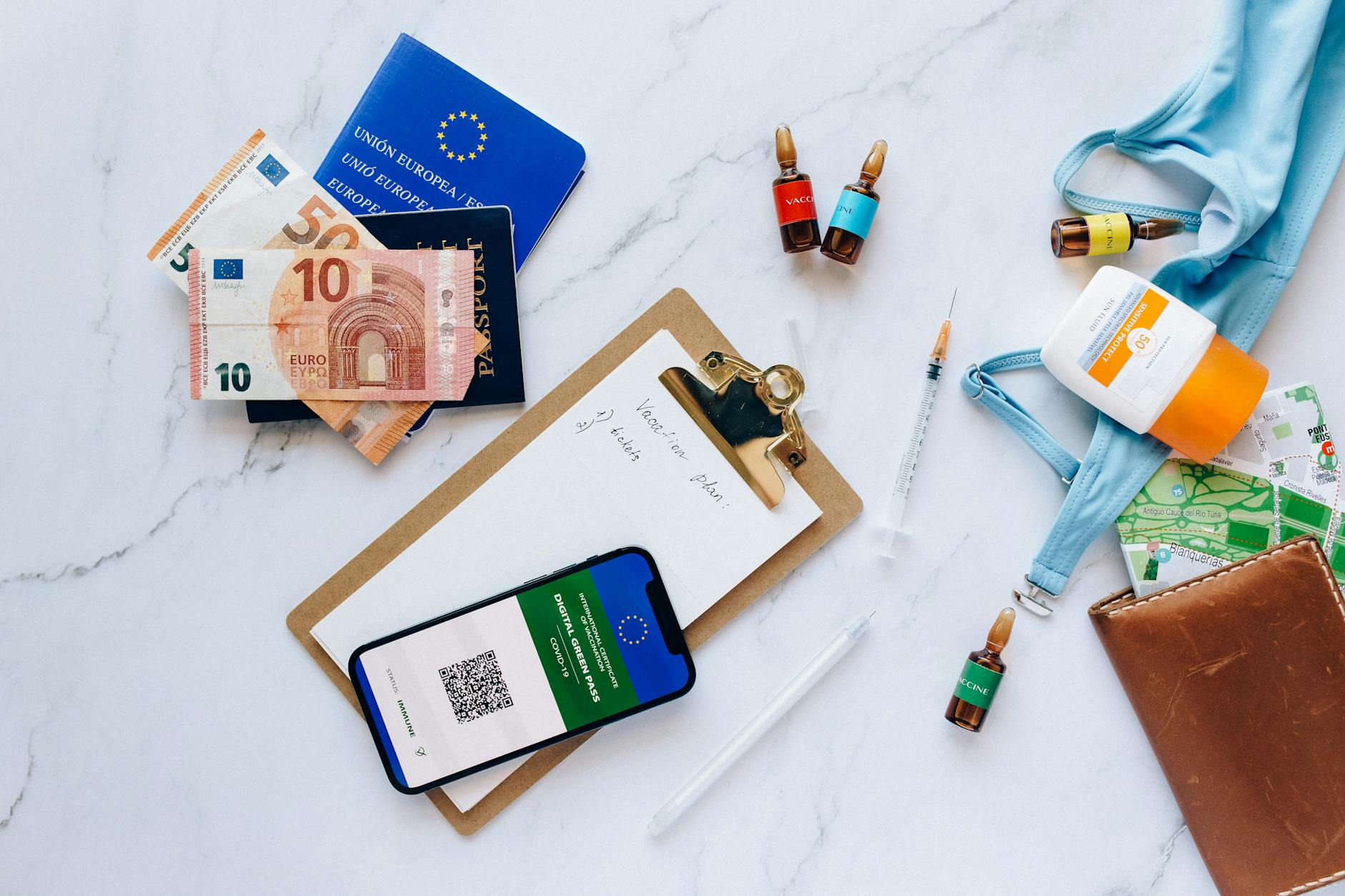
Cards, cash, and phones fail in different ways, and one failure can trigger the next. A dead battery can block maps, rides, banking apps, and your camera at the same time.
The Consumer Financial Protection Bureau advises you to alert banks, carry more than one payment option, and watch for foreign transaction fees. That matters because a bank fraud block at an airport ATM can leave you stranded with cash in the wrong currency.
| Tool | Why it matters | Set up before departure |
|---|---|---|
| Backup card | Gives you a second way to pay if the main card is lost, declined, or frozen. | Store it apart from your wallet and write the issuer contact number elsewhere. |
| Phone passcode | Blocks casual access to banking apps, email, and saved documents. | Use a long passcode and turn on face or fingerprint unlock as a backup. |
| Find My Device | Lets you locate, lock, or erase an Android phone after loss or theft. | Sign in, enable location, and confirm recovery details before you fly. |
| Offline maps | Gives you directions without Wi-Fi or data service. | Save your hotel, embassy, and transit stations before you leave home. |
| Travel alerts | Flags suspicious card use faster than waiting for a monthly statement. | Turn on app alerts for purchases, cash withdrawals, and login attempts. |
Harden your phone before you board
A strong passcode matters more than the device itself. Biometric locks are convenient, but a long alphanumeric code is harder to guess after someone watches you unlock it once.
Store embassy contact information, a local taxi number, hotel details, and scanned documents in a secure notes app or cloud folder. Carry a power bank too, because battery failure can become a chain reaction.
Use connectivity with suspicion
Airport Wi-Fi, hotel Wi-Fi, and mystery SIM offers should all get a second look. A network that looks official can still route you to a bad login page, and a card reader that looks polished can still have a skimmer attached.
Verify a SIM or payment service through more than one signal: the shop address, the payment method, the mobile brand, and the spelling on the receipt. That habit helps you avoid scams while traveling without turning every task into a chore.
A few careful choices about where you stay and how you move can prevent most avoidable hassles.
Keep one card and a small cash reserve apart from your wallet. That split reduces your loss when a pocket gets picked, a bag gets left behind, or an ATM swallows a card.
Choose Safer Places to Sleep and Move Around
Where you sleep shapes how safe the next twelve hours feel. A room near your arrival point, transit, and main plans cuts late-night wandering and lowers the odds of using a bad route while tired.
The State Department and CDC both point you toward safer, well-populated neighborhoods with reliable transport and visible staffing. That means strong doors, working locks, a staffed front desk, and a location that does not force you through empty streets after dark.
Pick lodging with movement in mind
Read recent reviews for comments on lighting, taxi access, elevators, and neighborhood noise. A pretty room in the wrong block can cost more in stress than it saves in room rate.
Look for a hotel or rental near the things you will use on day one, not just the things that look good in photos. A short walk to transit and food can matter more than a bigger bed.
Plan the first ride before arrival
Landing at 11 p.m. with no transport plan is a setup for bad choices. Prebook an airport pickup, save the driver name and plate number, and keep the hotel address in the local language.
Licensed taxis, vetted rideshare services, and hotel-arranged cars reduce a lot of friction. They do not remove every risk, so match the plate, confirm the driver, and avoid getting into a car that does not match the booking details.
Move in daylight whenever you can
Daytime movement gives you better visibility, more open businesses, and more chances to ask for help. Night buses, empty stations, and side streets get worse once fatigue sets in.
NHTSA road safety guidance matters abroad too, especially for pedestrians. Local traffic rules, crossing habits, and helmet laws can differ sharply from what you know at home, and traffic can be a bigger danger than theft in some cities.
Once the bed and transport are set, the next layer is how you carry what matters. That is where petty theft risk drops or rises fast.
Once your route is settled, the way you pack and carry essentials becomes the next line of defense.
Travel Light, Stay Visible, and Keep Valuables Controlled
A crowded station is not the place for a camera bag, dangling jewelry, and three open pockets. Thieves look for distraction, not drama, and they often choose the traveler who is staring at a timetable instead of the person who looks confident and moving.
Travel safety tips for international travel often sound abstract until you stand in an airport queue with your wallet half out. At that point, the rule is plain: keep your load small, your closures tight, and your hands on your own items.
Trim what you carry each day
- Use a closing bag. Zippers, clasps, or buckles slow quick hands better than open totes.
- Split essentials. Keep passport, card, and cash in separate places instead of one bundle.
- Carry only day needs. Leave extra cards, extra cash, and spare documents at lodging.
- Skip flashy items. Large jewelry, visible tech, and thick wallets draw attention.
- Keep one hand free. It helps with doors, railings, and sudden crowd movement.
Watch transit hubs with special care
Airports, train stations, buses, and popular tourist streets create the same problem: too many strangers, too much motion, and too little time to study faces. That is where shoulder bumps, distraction ploys, and bag grabs show up.
Keep your passport and phone on your body, not buried in a backpack. A small cross-body bag with the zipper facing inward gives you faster access and less temptation for anyone standing close.
Use low-profile behavior
Do not flash cash at the ATM, sort your passport at the curb, or announce your hotel name aloud in a crowd. Those are small signals, but they tell nearby people exactly how distracted you are.
A confident scammer can cost more time than a loud thief. The scam works because you want to be polite, and the fraudster wants you hurried, confused, and grateful for help.
The same logic carries into health, which is the risk many travelers ignore until a bad meal or a fever ruins the schedule. That next layer deserves its own plan.
Small habits around what you eat and touch can keep a simple trip from becoming a medical detour.
Protect Your Health Before Food, Water, and Bugs Become Problems
Food poisoning and dehydration can wreck a trip faster than theft. CDC and WHO guidance both point to the same basics: safe food, safe water, hand hygiene, vaccines, and bite protection where insect illness is a risk.
A travel health kit does not need to be huge. It does need to be ready before departure, because a pharmacy search after midnight in a new city is not the time to figure out what was packed.
Pack a small health kit
Put pain relievers, oral rehydration packets, bandages, antiseptic wipes, hand sanitizer, and prescriptions in one pouch. Keep medicine in original packaging so border staff and clinicians can see what it is.
Add a doctor’s note for injectables, inhalers, or any drug that could be questioned at customs. Medication rules vary, and some countries restrict common cold or ADHD medicine more tightly than you would expect.
Handle food and water with local discipline
Boiled, bottled, sealed, or otherwise treated water is the safer pick in higher-risk areas. Cooked food served hot is safer than food that sits out on a warm buffet table for hours.
Wash your hands before eating and after transit, especially in airports and train stations where every surface gets touched by thousands of hands. The germ load on a door handle is not visible, which is exactly why this step matters.
Use insect protection where the region calls for it
Mosquito-borne illnesses depend on the area and the season, and CDC travel health guidance warns you to match protection to the destination. Long sleeves, screened rooms, and bite protection matter near wetlands, jungle, and some urban zones too.
That is a biological problem, not just a comfort issue. Many insect-borne diseases spread when a mosquito transfers a virus or parasite between hosts, so reducing bites cuts the route of spread rather than just the annoyance.
Know where care comes from abroad
Before you need a clinic, know the nearest reputable hospital, the local ambulance number, and the insurance process for direct billing or reimbursement. Travel insurance is only useful when you know how to file a claim and whom to call first.
Some policies cover emergency evacuation, while others cover only a narrow set of visits. Read the exclusions for preexisting conditions, alcohol use, and high-risk activities before you count on coverage.
Health problems get harder at night, and so do judgment calls. That is where solo time and nightlife call for a stricter rulebook.
As daylight fades, the same caution shifts from physical health to the judgment calls that nightlife demands.
Handle Nightlife and Solo Time With Extra Care
Late hours compress bad decisions. Fatigue, alcohol, loud music, and a new city work together to shrink awareness and stretch trust.
Travel safety tips for international travel need a nightlife chapter because bars, clubs, and late rides create a different kind of exposure. The risk is not only theft; it is also disorientation, bad routing, and people pressing you to move faster than you should.
Set a night plan before you go out
Tell someone where you are going, who is with you, and how you plan to get back. A check-in text at a set hour gives you a simple outside anchor when the evening gets messy.
Keep enough battery for the trip home, not just for photos. A dead phone at 1 a.m. can strand you with no map, no ride, and no easy way to call your lodging.
Stay deliberate with alcohol and strangers
Drink less than you do at home, and watch any drink that leaves your hand. That advice sounds plain because it is plain, and plain beats clever when judgment is under strain.
CDC travel health guidance points you toward trusted transport and keeping companions in sight after dark. Solo time can still be safe, but pace needs to be slower, exits obvious, and acceptance of help far stricter.
Use added care in ride situations
Check the plate, driver name, and pickup point before you get in the car. A mismatch between booking details and the car in front of you is a reason to step back, not a small glitch to ignore.
Night rides are where confusion spreads fast. Street lights blur plates, music drowns out detail, and fatigue makes you accept the first car that stops. That is exactly when a calm, repetitive routine pays off.
Even careful travelers run into theft, loss, or sickness. The difference is how fast recovery starts and how little damage spreads.
Even the best plans need a recovery path, because quick action limits damage when things go wrong.
Recover Fast When Theft, Loss, or Illness Strikes
A stolen wallet or a bad fever is not the end of the trip. The real test is order: who to contact, what to block, and which documents to replace first.
The State Department recommends reporting a lost or stolen passport at once, then contacting the nearest embassy or consulate. That same fast response works for cards, phones, and insurance claims, because delay gives the problem room to grow.
Use a fast response order
- Call the bank. Freeze cards, dispute suspicious charges, and ask about replacement options.
- Contact the carrier. Suspend the SIM or service line so a stolen phone cannot drain accounts.
- Reach the embassy. Report passport loss and ask for the replacement steps and local instructions.
- File a police report. Some insurers and embassies want the report number before they move.
- Pull backups. Use cloud files, printouts, and saved contacts to restore access and identity.
Use illness plans instead of guessing
For fever, dehydration, breathing trouble, chest pain, confusion, or severe vomiting, seek care right away. Do not wait for a next-day appointment when the warning signs are already strong.
Document every receipt, diagnosis, and medication name for the insurer. Claims stall when the paperwork is thin, not when the illness is dramatic.
Keep the trip moving safely
A spare card in a separate pocket, an offline map, and a printout of your lodging address can keep you functional while systems reset. Those backups turn a bad day into a manageable one.
Travel safety tips for international travel are really about shortening the gap between problem and response. The faster you act, the less theft, loss, or illness can spread into the rest of the trip.
That speed matters most when turning an emergency into a manageable setback before it spreads.
Final Thoughts
Your safest move is the boring one that feels dull at 10 p.m. but smart at 10 a.m. Check destination risks before you buy, set up documents and backups before departure, and stay strict with transport, money, health, and nighttime decisions once you arrive. That layered habit does more than any single trick.
FAQ
How do I stay safe in another country?
You stay safer by checking official advisories, carrying fewer valuables, using reliable transport, and saving embassy and emergency numbers before departure. Add phone backups, card backups, and local-law research, and your margin gets much wider.
What should I do before traveling to a new country?
Check passport validity, visa requirements, vaccines, travel insurance, and country-specific safety alerts. Save paper and digital copies of your passport, itinerary, and insurance card, then register in STEP so a U.S. embassy or consulate can contact you in an emergency.
How do I avoid scams and theft while abroad?
Keep your bag zipped, split cash and cards, verify rides and SIM offers through multiple signals, and stay alert in transit hubs and tourist zones. Most scams work by rushing you or distracting you, so slow your pace and confirm details twice.
How do I avoid getting sick in a new country?
Follow CDC and WHO food and water advice, keep your hands clean, stay current on vaccines, and use bite protection in higher-risk areas. Bring prescription medicine in original packaging and know where local medical care sits before you need it.
What should I do if my passport or phone is lost or stolen abroad?
Report the loss at once, call your bank and carrier, and contact the nearest U.S. embassy or consulate for passport replacement steps. Use your cloud backups, paper copies, and stored contacts to restore access to money, documents, and lodging details.