

A late departure, a canceled trip, or baggage that does not arrive with you each counts as a separate travel disruption. Your best response is to identify the disruption fast, save proof immediately, and ask for the specific remedy that fits the problem.
You need the airline’s answer, but you also need your own record. If you’re at the airport or waiting for delayed baggage, the first hour matters because rebooking, refund rights, and baggage claims all depend on what you document now.
Start With The Right First Move
The label matters before you accept any offer. A delay, a cancellation, a missed connection, and a bag issue each trigger a different response, so you need to sort the problem before you agree to a voucher or a new itinerary.
Check the airline app, the airport board, and the gate desk in that order. The operating carrier usually controls rebooking, care, and baggage handling, while the ticket seller may not have the authority to fix the trip.
- Sort the disruption. Decide whether you have a delay, cancellation, misconnect, or bag issue before you act.
- Check all sources. Compare the app, airport board, and staff updates before taking the first offer.
- Save the basics. Keep your boarding pass, booking reference, bag tag, and screenshots from the start.
- Ask for a reference. Get the case number or baggage file number before you leave the counter.
- Write down names. Record the agent name, time, and what was promised.
For baggage trouble, file a report before you leave the airport. Prompt notice and written records make claims easier to trace, and the U.S. Department of Transportation expects delayed or lost bags to be reported right away.
Save receipts and timestamps first. Airline systems can update later, but your phone photos and bag tag stay fixed proof.
That evidence matters because the next step is separating refund rights from rebooking and compensation, and each claim follows its own rule set.
A paper trail only helps once the real question is whether you should take cash back or accept a different itinerary.
Sort Refunds, Rebooking, And Compensation
A refund, a new itinerary, and cash compensation are separate requests. Airlines often blend them in one conversation, but you get farther when you treat each one on its own.
For airline refund policies, the core question is whether the airline canceled your flight or made a significant schedule change that left you with no workable trip. In that situation, the U.S. Department of Transportation says unused tickets must be refunded if you do not take the replacement.
| Request | What it covers | Where it comes from |
|---|---|---|
| Refund | Unused fare and some unpaid service fees | DOT refund rules and fare terms |
| Rebooking | New flight or alternate route to your destination | Airline customer service or contract of carriage |
| Compensation | Cash, voucher, or goodwill payment for disruption | Airline policy or foreign passenger rules |
| Reimbursement | Meals, hotels, rides, and essentials you paid for | Airline care policy, insurance, or card benefits |
Use rebooking only after you compare it with a refund and alternate transport. A voucher can help in a pinch, but it can also lock you into the same carrier and the same fare rules that already failed you.
EU261 and UK261 can go farther on compensation for certain cancellations and long delays, while the Montreal Convention governs many international baggage claims. On a domestic U.S. trip, the practical move is usually refund or reroute, plus separate reimbursement for real expenses.
That split matters most once the flight is canceled or delayed long enough that the trip no longer works for you.
When the trip no longer works, the ticket rules shift from inconvenience to whether your money must be returned.
Know When A Cancelled Or Significantly Delayed Flight Triggers A Refund
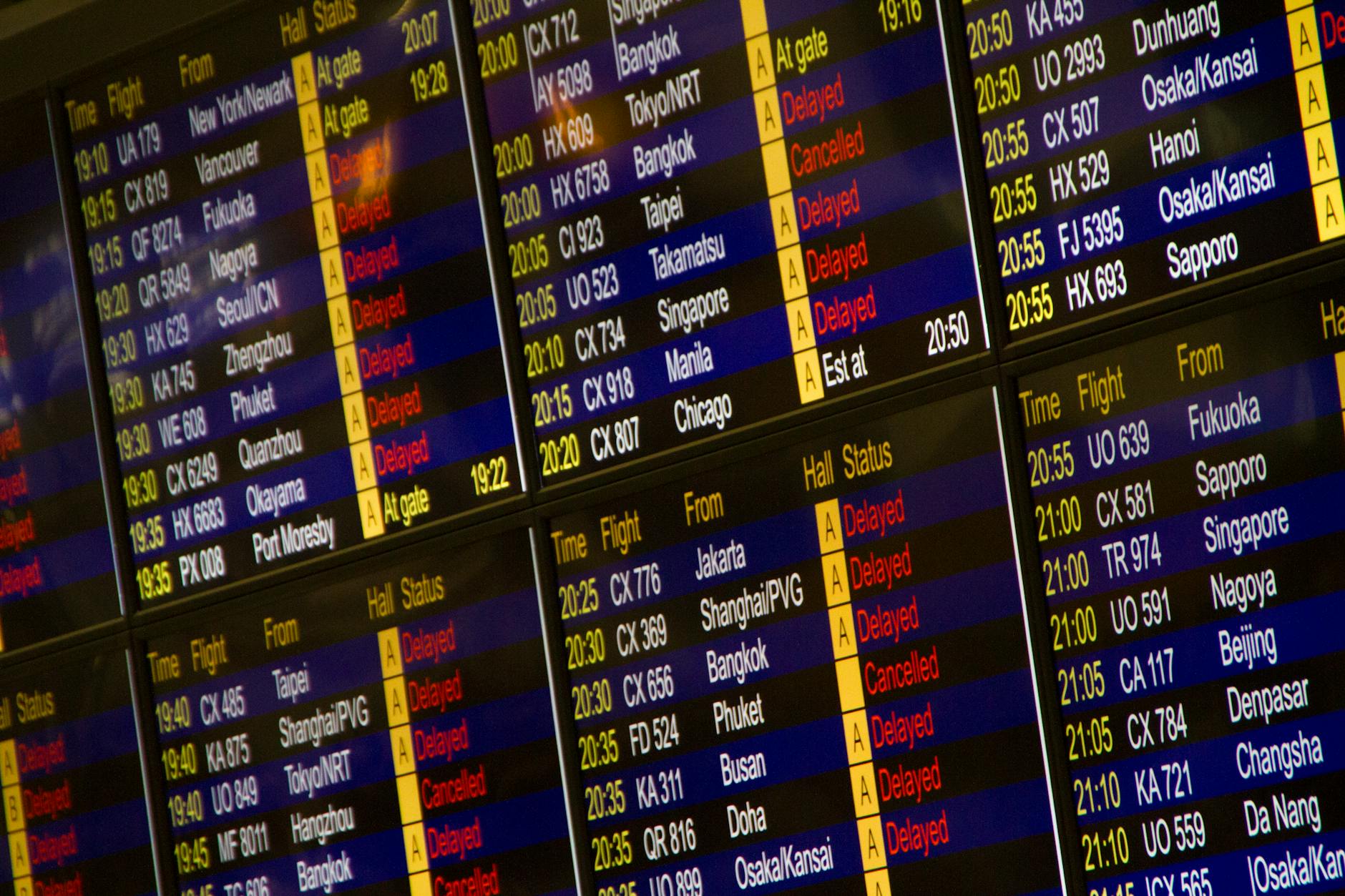
A cancellation or major schedule change can turn a ticket into refundable money. The DOT refund guidance focuses on whether the new flight still works for you after the airline changes the time, routing, or connection.
Ask for the fare back when the revised plan no longer fits your needs. That request should cover the unused ticket value and any ancillary fees tied to the disrupted segment, such as a seat fee or checked bag fee.
Keep the refund request narrow. Focus on the missed flight itself, because a short written claim is easier to process than a broad complaint about the whole trip.
A major delay can count as a significant schedule change, but the facts control the result. A 90-minute shift on a low-stakes trip is not the same as a six-hour change that breaks a wedding connection or forces an overnight stay.
Weather changes the analysis too. A storm can wipe out cash compensation under some rules, yet refund rights, rerouting, and care such as meals or lodging can still remain available depending on the route and airline policy.
That distinction leads straight into rebooking, because the next offer at the counter can quietly cost you money you had not planned to give up.
Because every reroute comes with tradeoffs, the fine print determines what compensation you may still keep.
Handle Rebooking Without Losing Track Of What You Gave Up
The next seat the airline offers is not always the best value. A same-day reroute, a bus or train, or a new ticket on another carrier may get you there faster or at a lower total loss.
Ask the agent to spell out the tradeoffs before you accept. Fare difference, change fee, seat charge, checked bag fee, and hotel support can all shift depending on the new option and the airline’s contract of carriage.
Compare The New Route Against Your Own Options
A nonstop on another carrier can beat a three-stop reroute that lands after midnight. That is especially true on short business trips, tight family itineraries, and same-day events where time matters more than loyalty points.
For example, a canceled Chicago to Atlanta flight at 4 p.m. might be rebooked onto a midnight connection through another hub. A coach seat on an Amtrak route, or a fresh booking on a different airline, can cost less in lost time than waiting for the carrier’s plan.
Get Support Promises In Writing
Meal, hotel, and ground transport promises belong in text, email, or the app chat. A printed voucher can help, but a written confirmation with the case number is stronger when the front desk shifts at midnight.
Airline customer service plans vary by carrier. Some cover a hotel during controllable disruptions, while others only offer a meal or a travel credit, so you want the wording before you leave the counter.
Do not leave on a verbal promise alone. A promise without a record turns into a memory contest, and airline memory usually wins that contest.
Once your new route is set, the next headache is checked luggage and where it ends up after the schedule change.
A new route solves the schedule, but it also raises the problem of bags traveling without you.
Manage Checked Bags After A Delay Or Cancellation
Checked baggage can take a different path from you the moment a flight falls apart. A bag may stay with the original plane, move to the next flight, or land in a sorting area with no one watching it closely.
Ask the airline where the bag is routed before you leave the airport. Delayed baggage and lost baggage claim paperwork depend on the bag tag, the route scan, and the file number the airline creates at the counter.
- Get the route plan. Ask whether the bag stays on the original aircraft or moves to the new itinerary.
- File the report. Complete the airline form or the airport baggage claim desk report on the spot.
- Save the tag. Keep the claim tag, bag sticker, and any printed reference number.
- Buy essentials only. Replace only what you need for the first day or two.
- Track arrival time. Write down when the bag arrives, because the timing affects reimbursement.
When baggage is delayed, ask where to file a missing bag report and get the property irregularity report number. That number matters because baggage tracking depends on internal scans, airport handoffs, and final delivery records. If you’re dealing with flight delays cancellations and lost luggage, this is the point where the paper trail starts to matter most.
One technical detail matters here: baggage claims sit on time stamps, not memory. The report date, the arrival date, and the receipt date line up like gears, and a bad gap in those gears can weaken the claim later.
If the bag never shows, the next step is a formal lost baggage claim. That claim asks the airline to pay for the actual contents, subject to route rules and treaty limits, not a guessed amount from thin air.
Lost luggage becomes expensive fast, which is why every receipt and description strengthens the claim.
Build A Claim File That Can Survive Pushback
Receipts win cases that polite conversation cannot. A photo of a toothpaste receipt, a hotel bill, and a rideshare charge tells a cleaner story than a verbal list of expenses.
Start a file the same day. Save meal receipts, hotel folios, ride records, toiletries, and replacement clothing tied to the disruption, then keep the original boarding pass and booking confirmation with them. That is the core of how to document an airline disruption claim.
Record The Timeline While It Is Fresh
Write down flight times, gate changes, delay notices, and the exact language used by staff. A note that says “agent at gate A12 promised hotel for the overnight” is stronger than a vague recollection two weeks later.
Photos help in another way. A screen showing a canceled flight at 7:12 p.m. and a boarding pass from 6:45 p.m. can settle arguments about when the trouble started and who knew what.
Track Every Contact And Reference Number
Keep case numbers from the airline, the baggage desk, the app chat, and any call center. Those numbers let you show that the claim was filed on time and kept moving through the carrier’s system.
Here is the simple rule: the more official marks you collect, the less room there is for a later denial based on missing proof. That is the difference between a claim file and a pile of hopeful notes.
Once your file is in order, decide which source should pay next, because airline money is only one lane in the system.
With the evidence assembled, the real leverage comes from knowing which payer has priority.
Use Airline, DOT, Insurance, And Card Coverage In The Right Order
Start with the airline when the issue involves the flight or the bag. The carrier controls the first fix, and the DOT expects you to raise the problem there before you move to outside channels.
Travel insurance and credit card travel benefits come after that. These products often cover trip interruption, baggage delay, or replacement purchases that the airline does not reimburse, but they work best when you already have airline proof and receipts.
- Airline first. File the flight or baggage claim with the carrier that operated the trip.
- Insurance next. Send the same documentation to travel insurance for covered extra expenses.
- Card benefits last. Check your card’s travel coverage for baggage delay or interruption support.
- Keep the order. Many benefit plans want airline denial or partial payment before they pay.
- Match the charge. Some card benefits require the trip or bag fee to have been charged to that card.
NerdWallet and credit card issuers such as Chase, American Express, and U.S. Bank publish benefit guides that show the claims order in plain terms: airline, then insurance, then card coverage. That sequence keeps you from giving up an airline right before another policy can use the same records.
For a chronic delay, repeated cancellation, denied boarding, refund dispute, or baggage claim that stalls, the DOT complaint portal becomes the next formal step. The agency does not hand you cash on the spot, but it does pressure carriers to answer in writing.
That answer matters when the claim is denied, because a denial backed by records is much easier to challenge than a vague front-line refusal.
A documented denial changes the game, because hard deadlines and a clean record open the door to escalation.
Escalate A Denied Claim With Deadlines And Records In Hand
Airline deadlines are short, and baggage claims can turn on a single missed date. Check the carrier’s claim window before you file, then keep proof that the form, email, or web submission went through.
When the airline gives you conflicting answers, stop relying on phone calls alone. Ask for a supervisor, ask for a written denial, and save every reply with the date and time stamp attached.
Push Back With Written Records
A chain of emails can show that the airline changed its story. That is useful for a refund dispute, but it is even more valuable on baggage claims where the airline first says delayed and later says not our issue.
For lost or delayed baggage, the Montreal Convention can matter on international routes, and the 21-day mark is a key line for a bag that stops being treated as merely delayed. After that point, the claim shifts toward lost baggage recovery, which depends on proof of contents and route limits.
Use Formal Channels When The Carrier Stalls
File a DOT complaint when the airline ignores a refund request, keeps a baggage file open without action, or gives answers that do not match its own policy. Small claims court can also fit smaller disputes where the paper trail is clean and the amount is worth the filing fee.
For example, a canceled domestic trip with a denied refund, a lost suitcase, and three unanswered emails is a strong escalation candidate. The better your timestamps and receipts, the less room the airline has to blur the story.
That is the whole point of handling flight delays cancellations and lost luggage as separate claims. Each one needs its own trail, its own deadline, and its own proof.
Handled that way, flight delays, cancellations, and lost luggage stop being one mess and become three winnable claims.
Final Thoughts
Your strongest move is speed plus records. Sort the disruption, ask for the right remedy, and keep every boarding pass, bag tag, receipt, screenshot, and written promise before the evidence disappears into airline systems.
FAQ
What should you do first if your flight is delayed or canceled
Check the airline app, the gate board, and staff updates, then ask for the next available option or a refund decision in writing. Save your boarding pass, booking reference, and screenshots right away, because those details anchor the claim later.
What happens to checked luggage if your flight is canceled
Your checked luggage may stay on the aircraft, move to a new flight, or get held for tracing. Ask the airline where it is routed before you leave, and file a baggage report on the spot so the bag stays tied to your file.
How do you file a claim for lost or delayed luggage
Report the problem to the airline at the airport, get a property irregularity report or claim number, and keep the bag tag and receipts for essentials. After that, submit the carrier’s written claim form and keep proof of every submission.
When are you entitled to a refund versus compensation
A refund returns unused ticket money when the airline cancels the flight or makes a significant schedule change and you do not accept the replacement. Compensation is separate and depends on the route, the airline’s policy, or rules such as EU261 or UK261.
How much will airlines compensate for lost luggage
Payment depends on the route, proof of contents, and the rules that apply to your trip. On many international trips, the Montreal Convention sets liability limits, while domestic claims rely on airline policy and federal rules for reimbursement.
What documents and proof do I need to file a claim
Keep your boarding pass, booking confirmation, bag tag, claim number, receipts, screenshots, and the names or times of any airline agents who helped you. Those records show what happened, when it happened, and what you spent because of it.
