
The best ultralight sleeping bags balance warmth, comfort, and low pack weight. Some use down for a tiny packed size. Others rely on synthetic fill for easy care and steady insulation.
This list covers six picks, including compact bags, roomy designs, and an emergency Mylar bivy.




More Details on Our Top Picks
Ultralight Down Sleeping Bag with Pillow
Should you want a lightweight, roomy bag for backpacking without giving up warmth, the Ultralight Down Sleeping Bag with Pillow stands out as a strong pick. You get a semi-rectangular shape with widened shoulders, 680 fill power duck down, and a 100% nylon shell that keeps weight down. The baffle-box design helps trap heat and limit down shift. With a detachable 80 g pillow, YKK two-way zipper, internal pocket, and reflective details, you’ll pack smarter. Choose a fill level for 3–4 seasons, then let it loft for 30 minutes after unpacking.
- Occupancy:1 person
- Shape:Semi-rectangular
- Closure:Zipper
- Compression Sack:Included
- Packability:Ultralight, compact
- Intended Use:Backpacking/camping/travel
- Additional Feature:680 FP duck down
- Additional Feature:Integrated detachable pillow
- Additional Feature:YKK two-way zipper
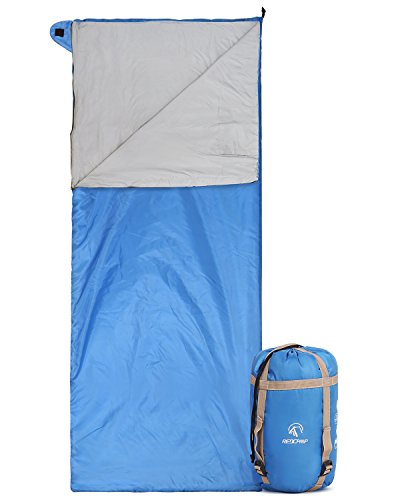
REDCAMP Ultra Lightweight Sleeping Bag for Backpacking
Should you want an easy-carry bag for warm-weather trips, the REDCAMP Ultra Lightweight Sleeping Bag for Backpacking is a strong pick, especially for adults who value low pack weight over heavy insulation. You get a 1.5-pound polyester bag that packs down to 7.9 x 4.7 inches, so it won’t crowd your pack. It fits sleepers up to 6 feet and works best in spring and summer, with a comfort rating of 68°F and a range of 59–77°F. The 2-way zipper lets you join two bags or open it as a quilt, and the compression sack simplifies packing.
- Occupancy:1 adult
- Shape:Rectangular
- Closure:2-way zipper
- Compression Sack:Included
- Packability:Ultralight, compact
- Intended Use:Backpacking/hiking/camping
- Additional Feature:Synthetic fill material
- Additional Feature:Internal stuff pocket
- Additional Feature:365-day warranty
3-4 Season Sleeping Bag with Compression Sack
In case you want a versatile sleeping bag that’s easy to carry and still handles cool-to-cold nights, the SOULOUT 3–4 season sleeping bag with compression sack is a strong fit. You get a lightweight, 4-pound bag with a roomy semi-rectangular cut, so you won’t feel cramped. Its polyester shell resists light rain and morning dew, while the soft lining feels comfortable against your skin. High-loft insulation helps keep you warm from 32–77°F. It fits up to 84 inches, packs into a waterproof stuff sack, and washes easily.
- Occupancy:1 person
- Shape:Semi-rectangular
- Closure:Zipper
- Compression Sack:Included
- Packability:Lightweight, packable
- Intended Use:Camping/hiking/travel
- Additional Feature:Water-resistant polyester shell
- Additional Feature:Machine washable
- Additional Feature:84-inch height limit
Sierra Madre Emergency Sleeping Bag Waterproof Mylar Bivy
Provided you want an ultralight emergency bivy that can earn a spot in your backpack, glove box, or bug-out bag, the Sierra Madre Emergency Sleeping Bag Waterproof Mylar Bivy is a smart pick. It weighs just 6 ounces, yet it reflects up to 90% of your body heat to help you stay warmer in harsh conditions. The tear-resistant Mylar shell blocks rain, wind, and snow, and its full-body size fits more users. You can reuse it, pack it into the drawstring sack, and count on it for survival kits, hiking, or prepper gear whenever exposure turns dangerous.
- Occupancy:1 user
- Shape:Bivy shape
- Closure:Drawstring closure
- Compression Sack:Included
- Packability:Ultralight, tiny
- Intended Use:Survival/emergency use
- Additional Feature:Reflects 90% heat
- Additional Feature:Mylar PET material
- Additional Feature:Emergency survival use
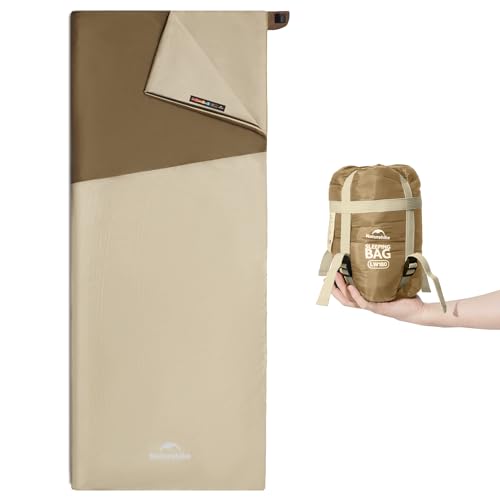
Naturehike Lightweight Compact Ultralight Sleeping Bag with Compression Sack
The Naturehike Lightweight Compact Sleeping Bag is a smart pick should you want a versatile, packable bag that won’t weigh you down on the trail. You can use this envelope-style bag for camping, hiking, traveling, hunting, or mountaineering, and it works well as a summer quilt in hot weather. Its 59°F/32°F rating and breathable build help you stay comfortable across changing conditions, especially with a sleeping pad. The 380T 20D taffeta shell, 210T pongee lining, and snag-free two-way zipper add comfort. It compresses to 5.1 × 12.2 inches, weighs 27.2 ounces, and includes a compression sack.
- Occupancy:1 person
- Shape:Envelope
- Closure:2-way zipper
- Compression Sack:Included
- Packability:Compact, compressible
- Intended Use:Backpacking/camping/hiking
- Additional Feature:380T 20D taffeta
- Additional Feature:Two-way zipper splicing
- Additional Feature:771.1 g weight
Naturehike Lightweight Compact Envelope Sleeping Bag with Sack
Naturehike’s Lightweight Compact Envelope Sleeping Bag with Sack is a smart pick provided you want a roomy, versatile bag that still packs down for travel, especially for camping, hiking, car trips, family use, or even home nights. You get a soft cotton-flannel lining, a waterproof pongee shell, and hollow-cotton fill that’s machine washable. The right-side anti-pinch zipper slides smoothly, while Velcro and a drawstring help seal out drafts. At 220 x 80 cm and about 6 lb, it suits cool nights around 32°F, and performs best with a pad and dry layers.
- Occupancy:1 person
- Shape:Envelope
- Closure:2-way zipper
- Compression Sack:Included
- Packability:Compact, packable
- Intended Use:Camping/travel/hiking
- Additional Feature:Cotton flannel lining
- Additional Feature:Anti-pinch zipper
- Additional Feature:14°F extreme rating
Factors to Consider When Choosing Ultralight Sleeping Bags
As you choose an ultralight sleeping bag, weigh its pack size and total weight initially so it won’t slow you down on the trail. Next, check the temperature rating, insulation type, and bag shape to match your climate and sleeping style. You’ll also want durable shell fabric that can handle repeated use without adding unnecessary bulk.
Weight And Pack Size
Weight and packed size can make or break an ultralight setup, so you’ll want to match both to your trip and your carry tolerance. Ultralight bags usually run from about 0.8 lb for minimalist summer quilts to around 3 lb for 3–4 season down models. In the event you’re hauling gear for several days, every ounce matters, so pick the lightest option that still suits your needs. Packed size matters too: highly compressible down bags can shrink to roughly 5 × 12 in, while synthetic or loftier bags could take 8 × 14 in or more. Down usually packs smaller than synthetic insulation, and fill power helps. Don’t forget sacks, liners, or pillow attachments—they add bulk quickly.
Temperature Rating Range
Temperature ratings give you the clearest starting point for choosing an ultralight sleeping bag, but you shouldn’t treat them as absolute. You should compare comfort, limit, and extreme ratings, then pick a comfort rating at or below the coldest night you expect. A summer bag can save weight, while a 3-4 season or winter model adds the insulation you need once temperatures drop below freezing. Also check how the bag fits your body; a snug mummy shape traps less dead air and usually feels warmer than a roomy cut. Should you camp in damp conditions, bear in mind that synthetic fills keep insulating better when wet, so the same rating can perform more reliably than down.
Insulation Type
After you’ve narrowed the temperature range, the next big choice is insulation type, because it directly affects warmth, packability, and price. Down gives you the best warmth-to-weight ratio and packs down smallest, so it’s the go-to for ultralight trips. Look for fill power ratings, usually 600 to 900+, because higher numbers mean better loft and less weight for the same warmth. Should you expect wet conditions or want to save money, synthetic insulation keeps working when damp and dries faster, though it’s heavier and less compressible. Also check fill weight, since more insulation, or higher fill power, usually means a lower comfort temperature. Good baffles matter too, because they spread insulation evenly and help prevent cold spots.
Bag Shape And Fit
Once you’ve picked the insulation, focus on shape and fit, because they can make or break an ultralight bag’s warmth and comfort. Choose a shape that matches your priorities: mummy bags trim dead space for the best warmth-to-weight, while semi-rectangular or envelope cuts give you more shoulder and hip room with a modest tradeoff in heat retention. Check the bag’s width at the shoulders and hips so it fits your body and sleeping layers without wasting space. Also confirm the length and max user height; extra interior volume means you’re heating more air. Should you toss, turn, or sleep on your side, a relaxed mummy or roomier cut can prevent compressed insulation and cold spots. Look for a hood and draft collar that seal snugly around your head and torso.
Shell Fabric Durability
When you’re choosing an ultralight sleeping bag, don’t overlook the shell fabric, because it affects durability, weather resistance, and general comfort. Aim for 20D–40D nylon or polyester, since it balances abrasion resistance with low weight; very light fabrics can tear, while heavier ones add bulk. Look for a ripstop weave, which helps stop small punctures from spreading on rough ground or brush. A DWR finish also helps shed moisture and dirt, and it can protect loft without much extra weight. Check the stitching, too: reinforced shoulders, footbox, and other stress points hold up better over time. Finally, balance breathability against protection; tighter weaves block wind and water more effectively, but they might trap heat and moisture during hard hiking.
Zipper And Closure Features
Zippers and closure hardware can make or break an ultralight sleeping bag, so don’t just zip past them. You’ll want a smooth, durable zipper that won’t snag your insulation or fail after repeated stuffing. Anti-snag designs and storm flaps help keep down or synthetic fill clear of the teeth while blocking drafts along the edge. Should you like flexibility, choose a two-way zipper; you may vent from the bottom on warm nights or pair bags for shared trips. Check zipper side orientation too, since right- and left-side zips must match for double-bag use. A full-length zipper lets you open the bag flat as a quilt, while a shorter zipper or draft tube holds more heat whenever temperatures drop and you need extra warmth.
Extra Comfort Features
Beyond the basics, a few comfort-focused details can make your ultralight sleeping bag feel much more livable on the trail. Should you like a little head support, choose a bag with an integrated or detachable pillow; it adds comfort without much weight. Wider shoulder cuts or semi-rectangular shapes give you room to shift, which helps on long nights. Two-way, snag-resistant zippers let you vent heat or open the bag as a blanket whenever temperatures swing. Look for internal pockets provided you want to keep essentials close, and draft-blocking features like Velcro, baffles, or a hood drawcord to hold warmth in. A soft inner lining, such as pongee, flannel, or high-thread-count polyester, can also feel better against your skin and manage moisture well.
Care And Warranty
Even the best ultralight sleeping bag won’t perform well should you not care for it properly. After each trip, air it out, spot-clean stains, and follow the maker’s down-care instructions. In the event that you wash down, use a front-loading machine, gentle detergent, and a low-spin cycle, or let a pro clean it to protect loft. For synthetic bags, wash on gentle with mild detergent, then dry fully on low heat with dryer balls. Never use high heat. Store your bag loosely in a breathable sack or hang it; don’t leave it compressed. Handle zippers, seams, and fabrics gently, and repair small tears fast. Finally, check warranty terms, keep receipts, and register the bag so you can get support quickly should something go wrong.
Frequently Asked Questions
How Do I Clean an Ultralight Sleeping Bag Properly?
Spot clean dirt with a damp cloth, then wash the bag gently in a front loading machine with down safe soap. Rinse it thoroughly, dry it on low heat or air dry it, and store it uncompressed. Avoid wringing, bleach, and high heat.
Can Ultralight Sleeping Bags Work in Humid Climates?
Yes, ultralight sleeping bags can work in humid climates, but choose breathable materials and keep airflow moving. Humid air can weaken insulation and make the bag feel damp, so moisture control matters overnight.
What’s the Best Way to Repair a Torn Sleeping Bag?
Use a repair kit right away. Clean the tear, line up the edges, apply adhesive patch or iron on repair tape, then let it cure fully. If the tear is large, take it to a professional repair shop.
How Long Do Ultralight Sleeping Bags Usually Last?
An ultralight sleeping bag usually lasts 5 to 10 years, depending on how often you use it, how well you care for it, and how you store it. Gentle washing and loose storage can help it last longer.
Should I Use a Sleeping Bag Liner for Extra Warmth?
Yes, if you want more warmth, a liner adds a thin insulating layer that helps hold body heat and makes your sleeping bag feel cozier. It packs small, weighs little, and can help your bag perform a bit better in cooler conditions.